What Is Osteoporosis? Causes, Symptoms, Diagnosis and Treatment (UK Guide)
Osteoporosis is a condition that makes bones fragile and more likely to break. What causes it, why it is silent, how the NHS diagnoses it and how it is treated.
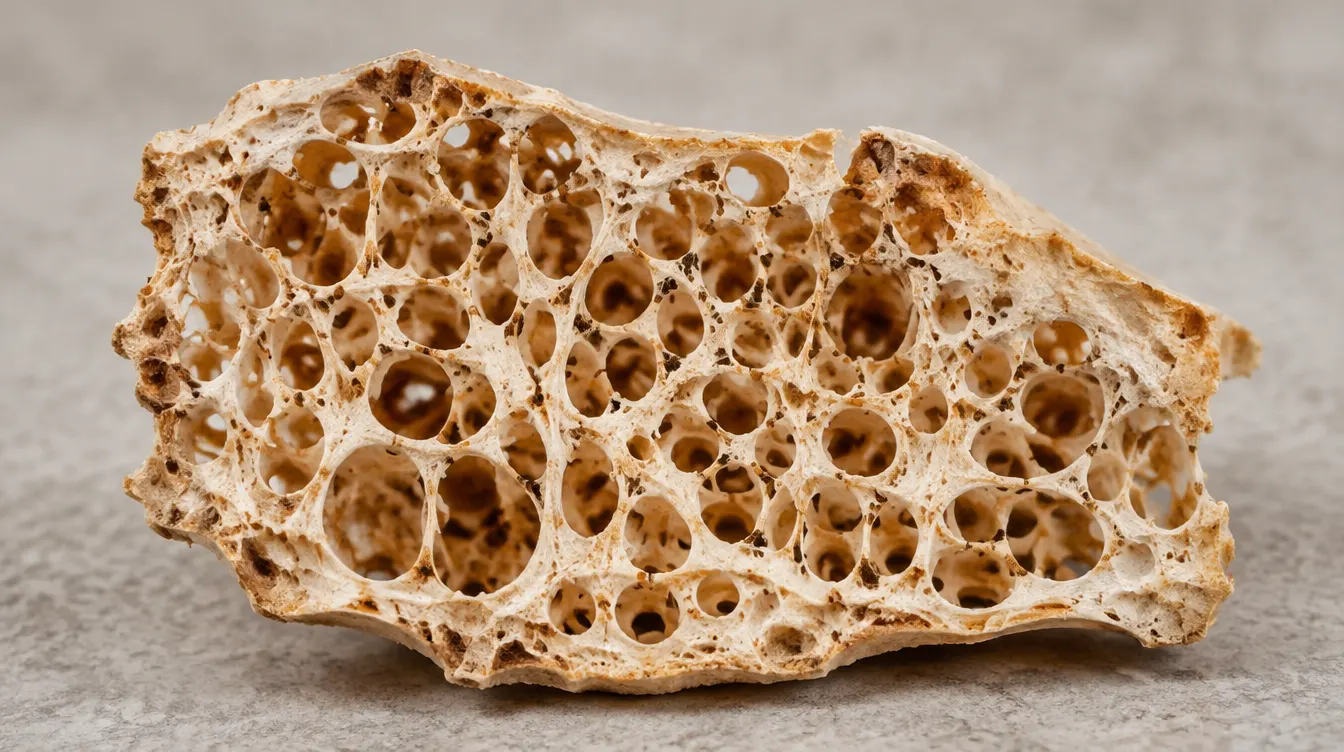
Osteoporosis is a health condition that weakens bones, making them fragile and more likely to break NHS. It is often called the "silent" bone disease because it usually causes no symptoms until a bone breaks, often after a fall that would not normally cause an injury. It is common, it can be diagnosed with a simple scan, and it can be treated.
What is osteoporosis?
Osteoporosis is a condition in which bones lose strength and become fragile, so they break more easily than healthy bone. The Royal Osteoporosis Society (ROS) describes it as "a condition where bones become weaker and break easily, even after a minor bump or fall" Royal Osteoporosis Society.
Bone is living tissue. Throughout life your body breaks down old bone and builds new bone in its place. In early adulthood the balance favours building, and the ROS notes that peak bone health is reached around age 30 Royal Osteoporosis Society. After that, bone density naturally declines, especially in women around the menopause. The NHS explains that losing bone is a normal part of ageing, "but some people lose bone much faster than normal" NHS. When that loss goes far enough, the inner honeycomb structure of bone thins and the bone becomes fragile.
The word itself means "porous bone". If you have been searching for the "disease where bones are brittle", osteoporosis is almost always the condition people mean in adults.
What is the difference between osteoporosis and osteopenia?
Osteopenia means bone density is lower than average but not low enough to count as osteoporosis. It is measured on the same scale, and many people with osteopenia never go on to develop osteoporosis. Our guide to osteopenia explains what the result means and what to do next.
How common is osteoporosis in the UK?
Osteoporosis is very common: the ROS estimates that 3.5 million people in the UK have it Royal Osteoporosis Society. The charity's figures also show:
- Half of women and 20% of men over 50 will break a bone because of osteoporosis.
- There are more than 500,000 fragility fractures in the UK each year, around one every minute.
- These fractures cost over £4.5 billion a year, with hip fractures accounting for about £2 billion of that.
Women are at higher risk than men, particularly if the menopause begins early, before the age of 45 NHS. But the NHS is clear that osteoporosis "can also affect men, younger women and children". If you are a man, our guide to osteoporosis in men covers the causes that are specific to men, such as low testosterone.
What causes osteoporosis?
Osteoporosis develops when bone is lost faster than it is replaced, and many factors can speed that up. Age and the menopause are the biggest, but the NHS lists a range of other risk factors NHS:
- Hormones: an early menopause (before 45), a hysterectomy before 45 (particularly when the ovaries are removed), or periods stopping for more than 6 months through over-exercising or too much dieting. In men, low testosterone.
- Family history: a family history of osteoporosis, and especially a parent who broke a hip. Our guide on whether osteoporosis is hereditary explains what this means for you.
- Medicines: long-term use of high-dose steroid tablets, and some medicines used to treat breast and prostate cancer that affect hormone levels. See steroids and bone loss and our wider guide to medicines that can cause bone loss.
- Medical conditions: an overactive thyroid, overactive parathyroid glands, rheumatoid arthritis, and conditions that affect absorption of nutrients, such as coeliac disease and Crohn's disease.
- Body weight and lifestyle: a body mass index (BMI) of 19 or less, eating disorders, heavy drinking, smoking, and long periods of inactivity such as bed rest.
For each of these in more depth, read what causes osteoporosis. Women going through the change can find specific guidance in menopause and bone loss.
What are the symptoms of osteoporosis?
Osteoporosis usually has no symptoms until a bone breaks. The NHS says it "is not usually painful until a bone is broken" NHS, and the ROS makes the same point: "It's these broken bones that can cause pain, rather than osteoporosis itself" Royal Osteoporosis Society. We look at this question in detail in does osteoporosis cause pain?
The signs to look out for are:
- A broken bone after a minor fall or bump, often the first time anyone realises something is wrong. The wrist, hip and spinal bones (vertebrae) are the most common sites, and the arm, pelvis and ribs can also break NHS.
- Height loss or a curved, stooped back, which can be a sign that bones in the spine have fractured. See losing height and osteoporosis.
- Sudden back pain, which can be caused by a spinal fracture. Our guide to spinal fractures and osteoporosis covers treatment and recovery.
Our full guide to the signs of osteoporosis explains what to watch for.
What is a fragility fracture?
A fragility fracture is a broken bone that happens after a minor bump or fall that would not break a healthy bone. The ROS notes that breaks caused by osteoporosis are often described this way Royal Osteoporosis Society. The NHS says treatment is still recommended after a fracture caused by osteoporosis NHS. Read more in our guide to fragility fractures.
How is osteoporosis diagnosed?
Osteoporosis is diagnosed with a DXA (DEXA) bone density scan, usually after your doctor has estimated your fracture risk. UK guidance from the National Osteoporosis Guideline Group (NOGG) recommends a FRAX assessment in anyone with a clinical risk factor for fragility fracture NOGG, 2024.
Step 1: a fracture risk assessment
Your GP may estimate your chance of breaking a bone over the next 10 years using a tool such as FRAX or QFracture NHS. These tools combine your age, sex, weight and risk factors such as smoking, steroid use and family history. Our guide to fracture risk and FRAX explains how the score works.
Step 2: a DXA bone density scan
A DXA scan measures bone density, usually at the hip and spine. The NHS describes it as "a short, painless procedure that takes 10 to 20 minutes" NHS. NOGG notes that the reference technology recommended by the WHO and the International Osteoporosis Foundation is DXA applied to the femoral neck (the top of the thigh bone) NOGG, 2024.
Your result is given as a T-score, which compares your bone density with that of a healthy young adult. The NHS bands are NHS:
- Above -1: normal
- Between -1 and -2.5: osteopenia (bone loss)
- Below -2.5: osteoporosis
For help reading your report, see DEXA T-scores explained. To find out who is eligible for a scan, read our guide to getting a bone density scan on the NHS.
Can you check your bones without a referral?
Some people want to know where they stand before any fracture or referral. Screen My Bones offers radiation-free REMS (Radiofrequency Echographic Multi Spectrometry) screening at partner venues, an ultrasound-based scan of the spine and hip that does not use ionising radiation. It is a private screening and monitoring option, not a diagnostic test: UK guidance (NOGG) does not recommend REMS for diagnosing osteoporosis, and DXA remains the reference test NOGG, 2024. Please discuss any result with your GP. You can read more about REMS technology or book a bone health assessment.
How is osteoporosis treated?
Osteoporosis is treated with bone-strengthening medicines and lifestyle changes, with the aim of preventing broken bones. The NHS says the decision about what treatment you need depends on your age, sex, fracture risk and whether you have broken a bone before NHS.
The main medicines used in the UK are:
- Bisphosphonates, such as alendronic acid, risedronate, ibandronic acid and zoledronic acid. They slow the rate at which bone is broken down. NOGG recommends an oral bisphosphonate (alendronate or risedronate) or intravenous zoledronate as first-line treatment NOGG, 2024. Tablets must be taken on an empty stomach with a full glass of water, staying upright for 30 minutes afterwards and waiting between 30 minutes and 2 hours (depending on the medicine) before eating or drinking anything else NHS. Follow the leaflet that comes with your medicine. See bisphosphonates for osteoporosis.
- Hormone replacement therapy (HRT), which NOGG lists as a first-line option for women aged 60 or under NOGG, 2024.
- Denosumab and romosozumab, injected medicines that may be used if other medicines cannot be taken or osteoporosis is severe NHS. Denosumab should not be stopped without a plan for follow-on treatment NOGG, 2024. Romosozumab is not used in people who have had a heart attack or stroke.
- Teriparatide, a daily injection that can increase bone density, used in a small number of people whose bone density is very low.
- Raloxifene, a daily tablet only recommended for women after the menopause NHS. It is not suitable for everyone, for example women who have had a blood clot, so your doctor will check your history first.
Our full guide to osteoporosis treatment explains each option, including side effects and how long it is taken. For the honest picture on whether bone can be rebuilt, read can osteoporosis be reversed?
Bisphosphonates usually take 6 to 12 months to work, and you may need to take them for 5 years or longer NHS. Do not stop or change an osteoporosis medicine without talking to your doctor first.
NOGG also recommends assessing falls risk in people with osteoporosis or fragility fractures, and offering those at risk an exercise programme to improve balance and muscle strength NOGG, 2024. Preventing a fall is as important as strengthening the bone.
Can osteoporosis be prevented?
You cannot change your age or genes, but the NHS says regular exercise and a healthy lifestyle help keep bones strong NHS. The main steps are:
- Exercise: the NHS says "regular exercise is essential", with weight-bearing and resistance exercise particularly useful for bone. Adults should do muscle-strengthening activity on at least two days a week. See exercises for osteoporosis and what to avoid.
- Calcium: adults need 700mg a day, ideally from food. Our osteoporosis diet guide lists good sources.
- Vitamin D: adults need 10 micrograms a day, and the NHS suggests everyone considers a daily supplement in autumn and winter.
- Stop smoking, which is associated with a higher risk of osteoporosis.
- Limit alcohol to no more than 14 units a week and avoid binge drinking.
These steps matter at every age, and they are also the foundation of treatment for people who already have osteoporosis.
Can you live a normal life with osteoporosis?
Yes, many people with osteoporosis live full, active lives, especially when it is diagnosed and treated early. The NHS notes that broken bones can take weeks or months to heal, and that having osteoporosis does not affect how long this takes NHS. Your GP or nurse can help with questions, and the ROS runs a helpline staffed by specialist nurses. Local support groups and fracture liaison services can also help.
The most useful thing you can do is find out your risk early. If you are over 50, have gone through an early menopause, take long-term steroids, or have a parent who broke a hip, ask your GP about a fracture risk assessment.
This article is part of our bone health series. It is general information, not medical advice. Speak to your GP about your own bone health and fracture risk.
References
- Osteoporosis — NHS
- Causes of osteoporosis — NHS
- Treatment of osteoporosis — NHS
- Preventing osteoporosis — NHS
- Living with osteoporosis — NHS
- What is osteoporosis? — Royal Osteoporosis Society
- Media toolkit (osteoporosis facts and figures) — Royal Osteoporosis Society
- Summary of main recommendations — National Osteoporosis Guideline Group (NOGG) (2024)
- Section 3: Fracture risk assessment and case finding — National Osteoporosis Guideline Group (NOGG) (2024)
Frequently asked questions
Osteoporosis is a health condition that weakens bones, making them fragile and more likely to break. The Royal Osteoporosis Society describes it as a condition where bones become weaker and break easily, even after a minor bump or fall.
Related reading
Bone Health Osteopenia: The Stage Between Normal Bone and Osteoporosis
Screen My Bones Editorial Team27 July 20264 min readBone Health Signs and Symptoms of Osteoporosis
Screen My Bones Editorial Team26 June 20267 min readBone Health Fragility Fracture: What It Means and Why You Should Ask for a Fracture Liaison Service
Screen My Bones Editorial Team30 October 20266 min read
Check your bone health
Radiation-free REMS screening. No referral needed.