Does Osteoporosis Cause Pain? What Hurts, Why, and How to Manage It
Osteoporosis itself is not painful. Broken bones are. Why fractures hurt, how long pain lasts, the UK pain relief options and when back pain needs urgent help.
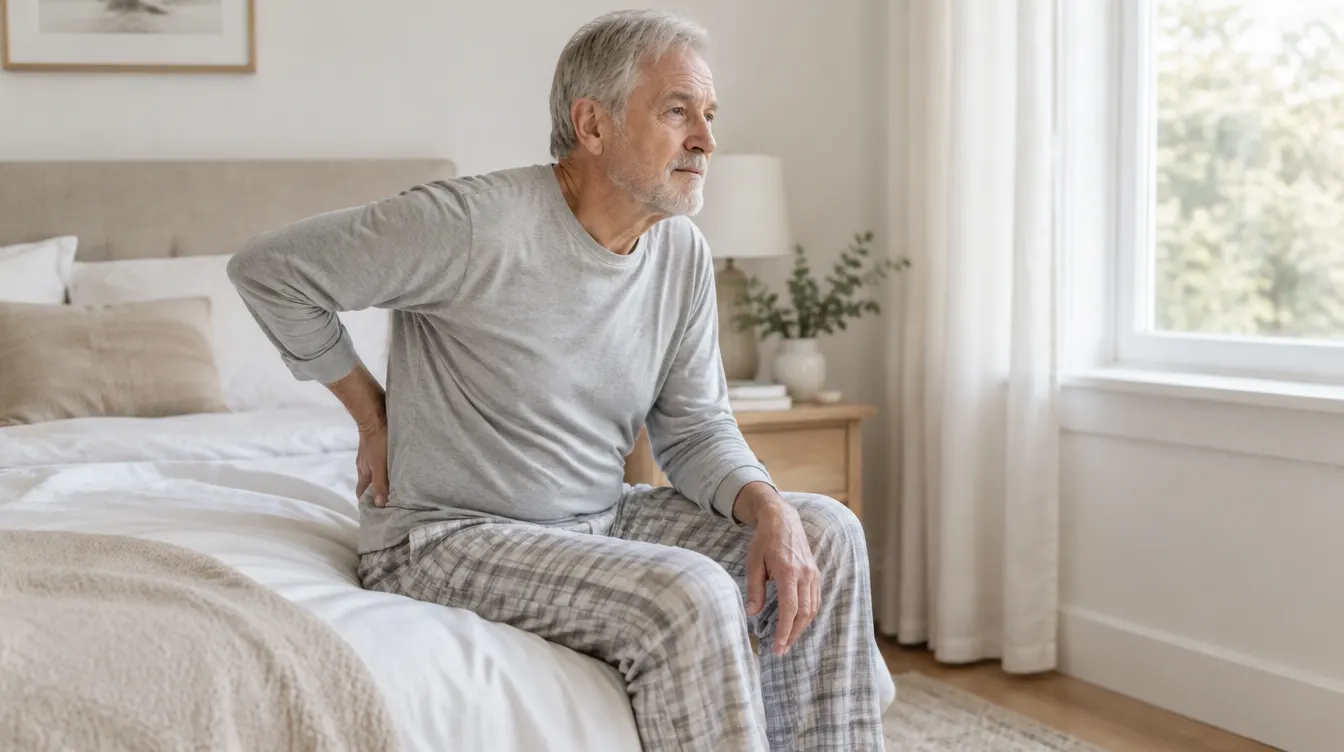
Osteoporosis itself is not painful. The pain comes from broken bones. The NHS says osteoporosis "is not usually painful until a bone is broken" NHS, and many people only find out they have it after a fracture. Spinal fractures in particular can cause back pain that is sharp at first and, for some people, long-lasting.
Does osteoporosis cause pain?
No, osteoporosis on its own does not cause pain. Pain happens when a weakened bone breaks. The Royal Osteoporosis Society (ROS) puts it plainly: "It's these broken bones that can cause pain, rather than osteoporosis itself" Royal Osteoporosis Society.
That is why osteoporosis is often called a silent condition. Bone can thin for years without any warning. The first sign is often a fracture after a minor fall or bump, usually in the wrist, hip or spine NHS. If you are new to the condition, our guide to what osteoporosis is explains the basics.
Is osteoporosis painful in the bones or joints?
Osteoporosis does not cause general aching in your bones or joints. If you have widespread aches, stiffness or swollen joints, the cause is more likely to be something else, such as arthritis, and it is worth seeing your GP.
Pain linked to osteoporosis is usually tied to a specific fracture. The exception is the spine. After a spinal fracture, the ROS explains that pain can come from several sources at once: nerves, muscle spasms, strain on joints and ligaments, and any arthritis already in the back Royal Osteoporosis Society. So the ache can feel broader than a single broken bone.
Why do spinal fractures cause so much pain?
A spinal fracture happens when a bone in the spine (a vertebra) is compressed or squashed, which changes the shape of the back and strains the tissues around it. The ROS explains that the bones heal in a compressed shape. This can lead to height loss, a curve at the top of the spine, shortness of breath and a squashed, bloated feeling in the stomach Royal Osteoporosis Society.
Not every spinal fracture is painful. Some are only noticed because a person has got shorter or developed a stoop. Our guide to losing height and osteoporosis covers those warning signs, and our article on spinal fractures and osteoporosis explains treatment and recovery.
How long does osteoporosis fracture pain last?
Pain from a new fracture usually eases as the bone heals, which for a spinal fracture takes about 6 to 12 weeks. The ROS says "a spinal fracture takes between 6 and 12 weeks to heal" and that you can usually expect the broken bone to heal within about three months Royal Osteoporosis Society. For other bones, the NHS says breaks can take weeks or months to heal, and having osteoporosis does not affect how long this takes NHS. See how long a fracture takes to heal for more detail.
Acute pain vs long-term pain
- Acute pain is the sharp pain of a new fracture. It is often worst in the first few weeks.
- Chronic pain is pain that continues after the bone has healed. The ROS says "if you still have pain after three months, it's described as chronic pain" Royal Osteoporosis Society.
Long-term pain is not rare. The ROS's key facts on the impact of osteoporosis state that 1 in 4 experience long-term pain, with 16% having been in pain they link to their osteoporosis for over a decade Royal Osteoporosis Society. The NHS notes that a spinal fracture can cause a hunched posture and pain that may become long-term, and that your GP or nurse can help NHS.
What helps with osteoporosis fracture pain?
Most people use a combination: pain relief medicines, staying gently active, and non-drug options such as heat, cold, TENS and physiotherapy. The NHS says "everyone experiences pain differently, so what works for you may differ from what works for someone else" NHS.
Pain relief medicines
The ROS describes a stepped approach Royal Osteoporosis Society:
- Mild pain: paracetamol. Adults can usually take one to two tablets (500mg each) every four to six hours, with no more than eight tablets in 24 hours. If you have a history of liver problems, talk to your doctor first.
- Mild pain: ibuprofen, which reduces pain and inflammation. Ask a doctor or pharmacist first if you have asthma or kidney, stomach or heart problems. Take it with food, and generally only for a few days unless your doctor advises otherwise.
- Moderate pain: codeine, dihydrocodeine or tramadol, sometimes combined with paracetamol (for example co-codamol). Higher doses need a prescription. A weekly buprenorphine patch is another option. Keep direct heat, such as a hot water bottle, away from the patch, because heat can increase how much medicine you absorb.
- Severe pain: morphine, as slow-release tablets, liquid or patches. You may be able to step down to a milder medicine as the pain eases.
- Muscle spasms: diazepam may be prescribed short term, but it can cause sleepiness and unsteadiness, which raises the risk of falls.
Always read the patient leaflet, do not take two products that both contain paracetamol, and speak to your doctor if over-the-counter medicines are not working.
Staying active
The ROS advises resting for a while if pain is severe in the early stages, then using pain relief to help you stay active Royal Osteoporosis Society. Staying as active as possible lowers the risk of chest infections, constipation and blood clots. A physiotherapist can recommend specific exercises to help you stay active after a spinal fracture Royal Osteoporosis Society. Gentle exercises for the spine and posture exercises can help once you are ready.
Non-drug options
- Heat and cold: the NHS lists warm baths or hot packs, and cold packs NHS.
- Relaxation and massage are also listed by the NHS.
- TENS: a small machine that sends mild electrical signals through pads around the painful area. The ROS says it works in a similar way to rubbing an area after you have hurt it. You may feel tingling but it should not be painful Royal Osteoporosis Society.
- Hydrotherapy and acupuncture may be offered through physiotherapy or a pain clinic. Always tell any therapist that you have osteoporosis.
The ROS is honest about the evidence: for most complementary therapies, it says there is no clinical research to prove how well they work for pain. They can still be part of a wider pain plan.
Pain management clinics
If your pain is not well controlled, your GP may refer you to a pain clinic. The ROS says these clinics offer a range of treatments for long-term pain, which may include medicines, injections, acupuncture and psychological approaches Royal Osteoporosis Society. There can be waiting lists.
Does osteoporosis treatment help with pain?
Osteoporosis medicines are not painkillers. They strengthen bone to lower the risk of the next fracture. Preventing further fractures is still one of the best ways to avoid more pain. If you have had a fracture after a minor fall, ask your GP about a fracture risk assessment and whether osteoporosis treatment is right for you.
When should back pain be checked urgently?
Some back pain needs urgent medical help, whether or not you have osteoporosis. The NHS says call 999 or go to A&E if you have back pain and NHS:
- pain, tingling, weakness or numbness in both legs
- loss of feeling around your genitals or anus
- changes in your bladder or bowels, such as difficulty peeing, or peeing or pooing yourself
- changes in how your penis or vagina feels during sex, or not being able to get or keep an erection
- chest pain
- the pain started after a serious accident
Ask for an urgent GP appointment or get help from 111 if you feel hot, cold, shivery or generally unwell, or if the pain is severe, starts suddenly or is getting worse quickly.
See a GP if back pain does not improve after a few weeks, stops you doing everyday things, is worse at night, comes from between your shoulders, or comes with weight loss you cannot explain or a change in the shape of your back. Sudden back pain in someone with osteoporosis, or at risk of it, can be a spinal fracture, so it is worth getting checked.
Can I find out if my bones are at risk before I am in pain?
Yes. Because osteoporosis is silent, the only way to know your bone health before a fracture is to have it assessed. Your GP can estimate your fracture risk and refer you for a DXA scan if needed. Our guide to the signs of osteoporosis explains who should ask.
Some people also choose a private, radiation-free check. Screen My Bones offers REMS (Radiofrequency Echographic Multi Spectrometry) screening at partner venues. It is an ultrasound-based scan of the spine and hip that does not use ionising radiation. It is a screening and monitoring option, not a diagnostic test, and UK guidance does not recommend REMS for diagnosing osteoporosis. Please discuss any result with your GP. You can find out about a bone health assessment.
This article is part of our bone health series. It is general information, not medical advice. Speak to your GP or pharmacist about pain relief that is safe for you.
References
- Osteoporosis — NHS
- Living with osteoporosis — NHS
- Back pain — NHS
- What is osteoporosis? — Royal Osteoporosis Society
- Spinal fractures (vertebral fractures) — Royal Osteoporosis Society
- Pain relief medicines — Royal Osteoporosis Society
- Other ways to help relieve pain — Royal Osteoporosis Society
- Media toolkit (osteoporosis facts and figures) — Royal Osteoporosis Society
Frequently asked questions
Not on its own. The NHS says osteoporosis is not usually painful until a bone is broken, and the Royal Osteoporosis Society says it is the broken bones that cause pain rather than osteoporosis itself. Spinal fractures in particular can cause back pain, sometimes long-term.
Related reading
Bone Health Spinal Fractures and Osteoporosis: Treatment, Recovery and Living Well
Screen My Bones Editorial Team30 October 20267 min readBone Health Fragility Fracture: What It Means and Why You Should Ask for a Fracture Liaison Service
Screen My Bones Editorial Team30 October 20266 min readBone Health How Long Does a Fracture Take to Heal? Healing Times, Stages and What Helps
Screen My Bones Editorial Team30 October 20266 min read
Check your bone health
Radiation-free REMS screening. No referral needed.