Medicines That Can Cause Bone Loss: Which Drugs Raise Osteoporosis Risk?
Steroids, some breast and prostate cancer drugs, anti-seizure medicines, PPIs and others can weaken bones. What UK guidance says, and why not to stop them.
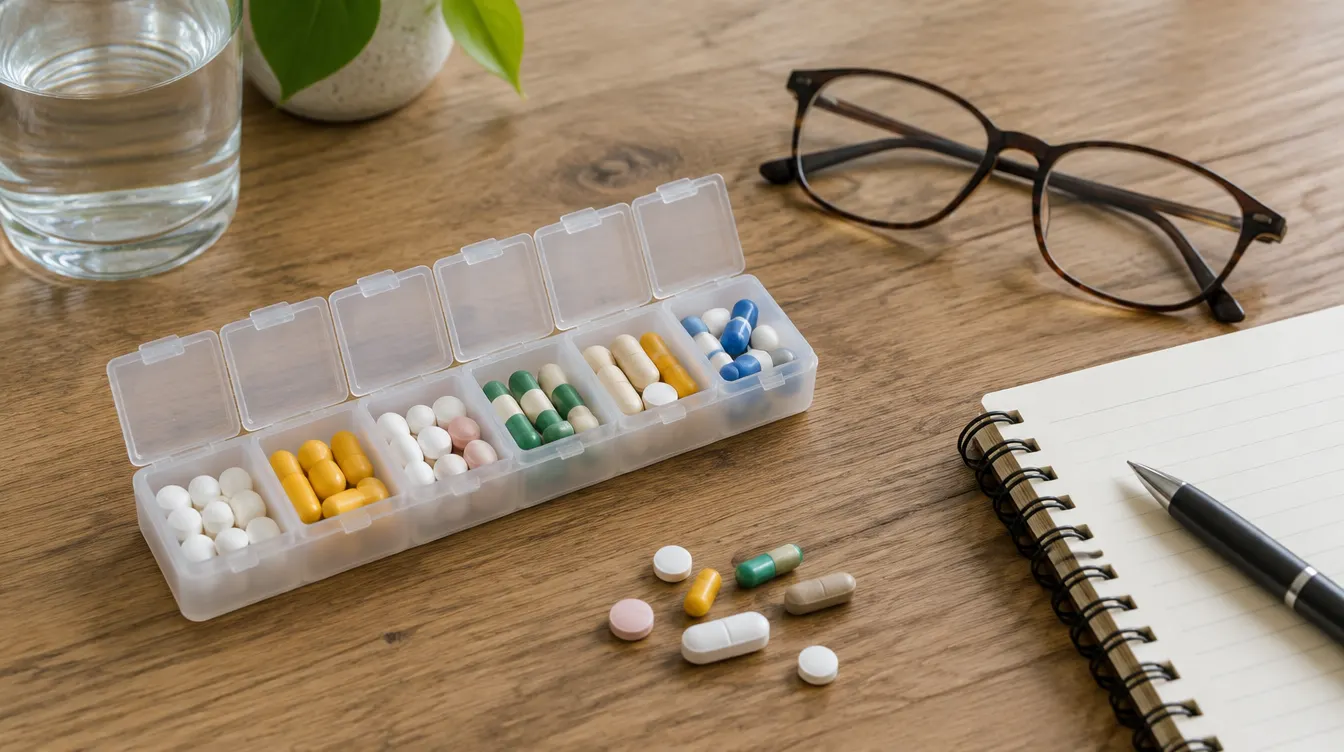
Several common medicines can weaken bones or raise the chance of a fracture, including long-term steroid tablets, some breast and prostate cancer treatments, some anti-seizure medicines, long-term proton pump inhibitors (PPIs), glitazone diabetes drugs, too much thyroid hormone and the contraceptive injection. This does not mean you should stop them. The Royal Osteoporosis Society (ROS) says the benefit of a medicine may outweigh the increased risk, and to "speak to a healthcare professional before you stop any medicine" Royal Osteoporosis Society.
Which medicines can cause bone loss?
UK guidance lists a specific group of medicines that should prompt a check of your fracture risk. The 2024 UK osteoporosis guideline from the National Osteoporosis Guideline Group (NOGG) lists the following medicines as risk factors that should trigger a fracture risk assessment NOGG, 2024:
- excess thyroid hormone treatment (levothyroxine and/or liothyronine)
- drugs affecting sex hormone production, including aromatase inhibitors, androgen deprivation therapy, medroxyprogesterone acetate and gonadotrophin-releasing hormone agonists and antagonists
- some diabetes drugs, such as thiazolidinediones (glitazones)
- some antiepileptics, such as phenytoin and carbamazepine
- some immunosuppressants (calcineurin inhibitors)
Steroids (glucocorticoids) are discussed separately in the guideline, which notes that they increase fracture risk in a dose-dependent way. The guideline also notes that several other drugs, including antidepressants, antipsychotics, benzodiazepines and PPIs, have been associated with increased fracture risk, but it makes no specific recommendation about stopping them.
The NHS lists long-term high-dose steroid tablets and "some medicines used to treat breast cancer and prostate cancer that affect hormone levels" among the causes of osteoporosis NHS. For the full picture of other causes, see what causes osteoporosis.
Do steroids cause osteoporosis?
Yes. Long-term steroid tablets, such as prednisolone, are one of the best-known medicine-related causes of osteoporosis. The ROS says people taking steroids have a higher chance of osteoporosis and broken bones than those who don't Royal Osteoporosis Society.
NOGG recommends that for anyone starting 7.5mg a day or more of prednisolone (or equivalent) for three months or longer, bone-protective treatment should be started at the same time NOGG, 2024. Our detailed guide to steroids and bone loss covers doses, inhaled steroids and what to ask your GP.
Which cancer treatments affect bone?
Breast cancer: aromatase inhibitors
Aromatase inhibitors, such as letrozole, lower oestrogen and can make bones weaker. The NHS says letrozole "can make your bones weaker and more likely to break" and that there is an increased risk of osteoporosis NHS. You may have DEXA scans before you start, one or two years into treatment, and after you finish, and your doctor may suggest a bisphosphonate to strengthen your bones.
Prostate cancer: hormone therapy
Hormone therapy for prostate cancer (androgen deprivation therapy) lowers testosterone, which can increase the risk of osteoporosis and fractures. The ROS advises that if you haven't had your bones checked, ask your specialist about a fracture risk assessment, and that if you have osteoporosis your doctor may recommend an osteoporosis medicine Royal Osteoporosis Society. Our guide to osteoporosis in men explains more about low testosterone and bone.
Can anti-seizure medicines cause osteoporosis?
Some can, particularly older medicines taken long term. The MHRA says long-term treatment with carbamazepine, phenytoin, primidone and sodium valproate has been associated with lower bone mineral density, which may lead to osteopenia, osteoporosis and fractures in people at risk MHRA, 2009. It advises considering vitamin D supplements for at-risk patients on long-term primidone, phenytoin, carbamazepine, phenobarbital or sodium valproate.
Do PPIs like omeprazole weaken bones?
Long-term PPIs may slightly increase the risk of fractures, but for most people the risk is small. The ROS says PPIs such as lansoprazole and omeprazole may slightly increase the risk of hip, spine or wrist fractures, with higher risk when they are used for over a year, at higher doses, in older people, or alongside other risk factors Royal Osteoporosis Society.
The MHRA reports that, with long-term use (more than a year), the risk of fracture is increased by 10 to 40% above baseline MHRA, 2012. It advises that people at risk of osteoporosis are treated according to current guidelines and have enough vitamin D and calcium. If you are over 50, take a PPI long term and have other risk factors, the ROS suggests talking to your doctor about a fracture risk assessment.
Which diabetes medicines affect bone?
Glitazones (pioglitazone) are the diabetes medicines most clearly linked to weaker bones. The ROS says research shows they lower bone strength and raise fracture risk more than other diabetes medicines, and advises that if you are over 50 and take one, you talk to your doctor about a fracture risk assessment Royal Osteoporosis Society.
Diabetes itself also affects bone; see type 2 diabetes and bone health.
Can too much levothyroxine weaken your bones?
Thyroid hormone at the right dose is not the problem. Too much is. NOGG lists "(Excess) thyroid hormone treatment (levothyroxine and/or liothyronine)" as a risk factor that should trigger a fracture risk assessment NOGG, 2024. Sometimes a higher dose is deliberate, for example after thyroid cancer. Your dose is set using blood tests, so never change it yourself. Our guide to thyroid and bone density explains this in detail.
Does the contraceptive injection cause bone loss?
The contraceptive injection (Depo-Provera, medroxyprogesterone acetate) can thin bones slightly, but this is usually reversible. The NHS says "using the contraceptive injection for more than 1 year can cause your bones to become weaker", and that "your bones are likely to return to normal after you stop" NHS. The ROS says studies show bone strength decreases by a small amount in users. See our guide to Depo-Provera and bone density.
Do antidepressants affect bone?
Antidepressants, particularly SSRIs, may slightly increase the risk of fractures. The ROS names sertraline, citalopram, escitalopram, fluoxetine and paroxetine, and says it is unclear whether this is due to changes in bone, more falls, or both. If you are over 50, take an antidepressant long term and have other risk factors, it suggests asking your doctor about a fracture risk assessment Royal Osteoporosis Society.
How can I protect my bones if I need one of these medicines?
Ask for a fracture risk assessment, look after the basics, and let your doctor decide whether you need bone protection. UK guidance recommends a FRAX assessment in anyone with a clinical risk factor for fragility fracture NOGG, 2024. Our guide to fracture risk and FRAX explains how it works.
Practical steps:
- Ask your GP or specialist whether your medicine affects your bones and whether you need a FRAX assessment or a bone density scan on the NHS.
- Get enough calcium and vitamin D. NOGG recommends ensuring sufficient dietary calcium and vitamin D and supplementing as necessary.
- Stay active with weight-bearing and muscle-strengthening exercise.
- Stop smoking and keep alcohol within limits.
- Ask about osteoporosis treatment if your risk is high. The ROS notes that if a medicine raises your risk, your doctor may prescribe an osteoporosis medicine. See osteoporosis treatment.
Some people on long-term medicines also want a way to keep an eye on their bones between NHS checks. Screen My Bones offers radiation-free REMS (Radiofrequency Echographic Multi Spectrometry) screening at partner venues, an ultrasound-based scan that does not use ionising radiation. It is a screening and monitoring option, not a diagnostic test, and UK guidance does not recommend REMS for diagnosing osteoporosis. Please discuss any result with your GP. You can book a bone health assessment.
This article is part of our medical conditions series. It is general information, not medical advice, and not a complete list of medicines that affect bone. Never stop or change a medicine without talking to your doctor or pharmacist.
References
- Medicines that increase your risk — Royal Osteoporosis Society (2026)
- Section 3: Fracture risk assessment and case finding — National Osteoporosis Guideline Group (NOGG) (2024)
- Summary of main recommendations — National Osteoporosis Guideline Group (NOGG) (2024)
- Causes of osteoporosis — NHS
- Side effects of letrozole — NHS
- Contraceptive injection: side effects and risks — NHS
- Antiepileptics: adverse effects on bone — MHRA Drug Safety Update (2009)
- Proton pump inhibitors in long-term use: increased risk of fracture — MHRA Drug Safety Update (2012)
Frequently asked questions
UK guidance links several medicines to weaker bones or more fractures, including long-term steroid tablets, some breast cancer treatments such as aromatase inhibitors, hormone therapy for prostate cancer, some anti-seizure medicines, long-term proton pump inhibitors, glitazone diabetes medicines, too much thyroid hormone and the contraceptive injection.
Related reading
Medical Conditions Rheumatoid Arthritis and Bone Health: The Osteoporosis Connection
Screen My Bones Editorial Team30 July 20266 min readMedical Conditions Thyroid and Bone Density: How an Overactive Thyroid Affects Bones
Screen My Bones Editorial Team29 July 20267 min readMedical Conditions Steroids and Bone Loss: Glucocorticoid-Induced Osteoporosis Explained
Screen My Bones Editorial Team28 July 20265 min read
Check your bone health
Radiation-free REMS screening. No referral needed.