Posture Exercises for Osteoporosis: How to Improve Your Posture Safely
Safe posture exercises for osteoporosis and a curved upper back, step by step from UK guidance, plus the movements to modify and when to see a physio.
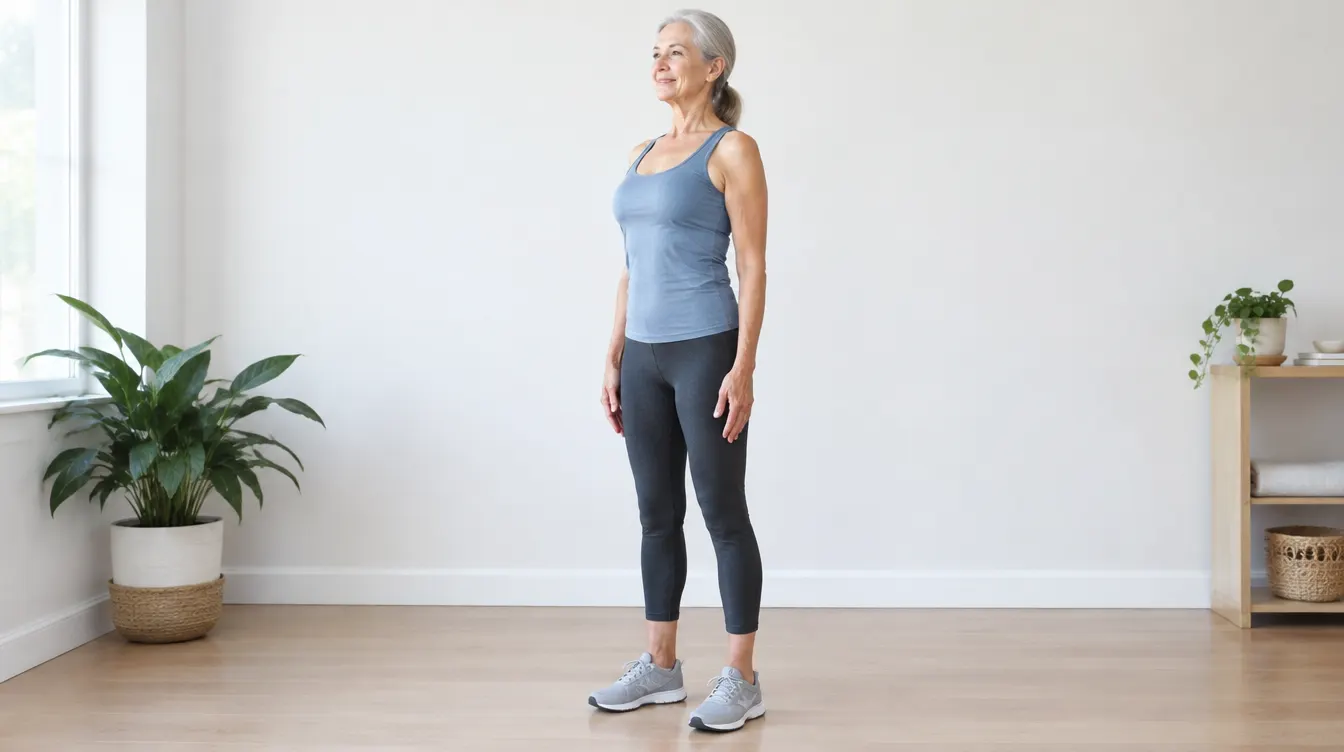
To improve your posture with osteoporosis, practise standing and sitting tall, do short, gentle posture exercises such as chin tucks and pulling your shoulders back, and strengthen the muscles of your back a few times a week. UK guidance supports this, and also advises changing exercises that round your back forward, especially with weight. If you have had spinal fractures, ask a physiotherapist to tailor the programme for you.
Why does posture matter with osteoporosis?
Good posture reduces strain on your spine, joints and muscles and helps with balance, and a more upright spine may help with pain, falls and fracture risk. The 2022 UK consensus statement on exercise for osteoporosis, known as Strong, Steady and Straight, says that reduced kyphosis (a less rounded upper back) may benefit pain, falls and vertebral fracture risk, and so recommends exercises focused on posture Br J Sports Med, 2022.
A rounded upper back can come from weak muscles, habit, or spinal fractures, which can also lead to losing height. The Royal Osteoporosis Society says posture exercises are especially helpful if you have had spinal fractures and are worried about height loss or a change in body shape, for example if your trunk feels shorter and you have breathlessness, a protruding tummy, indigestion or stress incontinence. They are good for you even if you have never had a fracture Royal Osteoporosis Society, 2019.
The ROS is honest about the limits. If fractures have changed the shape of your spinal bones, exercise cannot reverse that, but it may make some difference to the symptoms and help prevent future problems.
Is it safe to exercise with osteoporosis?
Yes, for most people. The UK consensus puts the emphasis on being able to continue exercise, not on banning it. It found little evidence that physical activity is linked to significant harm and concluded that inactivity should be avoided Br J Sports Med, 2022.
The ROS says most people with osteoporosis can exercise safely, but advises talking to your doctor or physiotherapist first if you have a history of many broken bones or spinal fractures, are recovering from a broken bone, or have concerns about your situation Royal Osteoporosis Society. Listen to your body and stop if something causes pain.
How often should you do posture exercises?
The Royal Osteoporosis Society suggests two or three days a week, with a rest day in between. Move into each position slowly and smoothly, as far as possible without pain. Aim for 3 to 5 repetitions, or hold positions for 3 to 5 seconds, and don't forget to breathe Royal Osteoporosis Society. The UK consensus suggests back exercises repeated 3 to 5 times and held for 3 to 5 seconds, at least twice a week Br J Sports Med, 2022.
If you struggle with balance or prefer to sit, use an armless chair.
What are the best posture exercises for osteoporosis?
The Royal Osteoporosis Society recommends five simple exercises you can do standing or sitting. The steps below follow its posture fact sheet Royal Osteoporosis Society, 2019. You can also watch the ROS physiotherapist demonstrate them on its posture exercises page.
1. Standing and sitting tall
Standing:
- Stand with your feet hip-width apart and your weight spread evenly through your feet.
- Keep your knees soft and tuck your tailbone under.
- Pull your lower tummy muscles in so you feel a slight inward curve at the base of your spine.
- Lengthen your spine, keep your shoulders down and relaxed, and look straight ahead.
- Tuck your chin in a little so your ear lobe is in line with your shoulder.
Sitting:
- Sit with your hips, knees and ankles at roughly 90 degrees and your feet flat on the floor.
- Pull your lower tummy muscles in and lengthen your spine.
- Keep your shoulders down and relaxed, look straight ahead and tuck your chin in a little, ear lobe over shoulder.
2. Chin tuck
- Standing or sitting tall, gently draw your chin back towards your spine.
- Take care not to look up or down.
- Hold for two seconds, then relax.
- Repeat as many times as feels comfortable.
3. Head tilt
- Standing or sitting, keep your shoulders down and relaxed and look forward.
- Bend your right ear down towards your right shoulder as far as is comfortable. Don't lean your head forwards or backwards.
- Hold for two seconds, return to the centre, then repeat on the left.
- Repeat up to ten times each side. As you progress, aim to take your ear a little closer to your shoulder.
4. Neck rotation
- Stand or sit with your shoulders down and relaxed.
- Slowly turn your head to look over your right shoulder, as far as you can.
- Hold for two seconds, return to the centre and relax.
- Repeat on the left. Do up to ten each side.
5. Shoulders back
- Standing or sitting, raise your arms out to your sides at shoulder height, palms facing forward.
- Squeeze your arms back, pulling your shoulder blades together, while keeping your chin tucked in.
- Hold for five seconds, then relax.
- Repeat up to ten times.
As these get easier, the ROS suggests gradually increasing the range of movement and combining them with muscle-strengthening exercises. It also recommends thinking "straight and tall" during the day, and watching out for "text neck" from looking down at your phone. One tip from the fact sheet: when you are alone, try sitting with a soft pillow on your head. Balancing it for a moment reminds you what an upright spine feels like.
Should you also strengthen your back muscles?
Yes. The UK consensus recommends exercises to improve muscle strength in the back to improve posture and support the spine Br J Sports Med, 2022. For people with painful spinal fractures, it recommends daily exercises to strengthen the back muscles, with a referral to a physiotherapist for tailored advice. It also says yoga, Pilates and similar programmes should be considered to help with posture and pain, with forward-bending moves adapted.
Our guide to osteoporosis spine exercises covers back-strengthening moves in more detail, and yoga for osteoporosis explains which poses to adapt. For whole-body strength, see resistance training for bone density.
Which movements should you avoid or modify?
The UK consensus says movements or exercise involving sustained, repeated or end-range forward bending (flexion) should be modified or avoided, especially with added load Br J Sports Med, 2022. In practice that means taking care with:
- Sit-ups and crunches. The consensus links spinal fractures to end-range, sustained, repeated or loaded flexion exercises, including sit-ups.
- Extreme forward-bending yoga positions.
- The Pilates "roll down" and "curl up". The consensus suggests alternatives should be considered.
- Any exercise that makes your back curve excessively, especially while holding a weight.
Twisting is less of a worry than many people think. The consensus says rotation (twisting) movements should be safe if performed smoothly and comfortably. For a fuller list, see our guide to exercises for osteoporosis and what to avoid.
How do you bend and lift safely with osteoporosis?
Keep your upper back straight and your neck in line with your spine, and bend from your hips rather than rounding your back. The UK consensus says this is the key principle for bending and lifting, and names the hip hinge as a simple technique for safe bending Br J Sports Med, 2022. The Royal Osteoporosis Society's moving and lifting section has further guidance on protecting your back and bending forward safely Royal Osteoporosis Society.
The steps below are a general description of a hip hinge as commonly taught, not taken from the consensus itself, so ask a physiotherapist to check your technique:
- Stand with your feet hip-width apart, close to what you are picking up.
- Keep your back long and straight and your chin gently tucked.
- Push your bottom back as if closing a car door with it, letting your knees bend.
- Lower yourself by bending at the hips and knees, not by curling your back.
- Hold the object close to your body and stand up by pushing through your legs.
When should you see a physiotherapist?
See a physiotherapist if you have had painful spinal fractures, or if you have had spinal or several low-trauma fractures and are starting impact or strength training. The UK consensus says a physiotherapy referral will be helpful after painful vertebral fractures, and for people with vertebral or multiple low-trauma fractures it recommends individualised physiotherapy advice for impact and progressive resistance training, at least when starting a new programme Br J Sports Med, 2022.
It also says people who fall repeatedly, or have started avoiding activity because they are worried about falling, should be referred to a local falls service. Your GP can refer you. A rounded back can affect balance, so our falls prevention exercises are a good partner to the posture routine above. If back pain is your main worry, see does osteoporosis cause pain?.
Posture exercises are one part of caring for your bones. If you want to know where your bone health stands, or track it over time, Screen My Bones offers radiation-free REMS screening of the spine and hip. It is a screening and monitoring option, not a diagnostic test, and UK guidance (NOGG) does not recommend REMS for diagnosing osteoporosis, so DEXA remains the test for a formal diagnosis. Please discuss any result with your GP. You can read about our bone health assessment or book a screening.
This article is part of our bone health series. It is general information, not medical advice. Speak to your GP or a physiotherapist before starting a new exercise programme if you have had fractures.
References
- Strong, steady and straight: UK consensus statement on physical activity and exercise for osteoporosis — British Journal of Sports Medicine (2022)
- Exercises to help with posture — Royal Osteoporosis Society
- Exercises to help with posture (fact sheet) — Royal Osteoporosis Society (2019)
- Moving and lifting safely — Royal Osteoporosis Society
Frequently asked questions
Practise standing and sitting tall, and do gentle posture exercises such as chin tucks and shoulders back, plus exercises that strengthen your back muscles. The UK consensus on exercise for osteoporosis recommends back-strengthening exercise to improve posture and support the spine.
Related reading
Bone Health Exercises for Osteoporosis of the Spine — and What to Avoid
Screen My Bones Editorial Team24 September 202611 min readBone Health Losing Height and Stooping: Warning Signs of Spinal Fractures
Screen My Bones Editorial Team30 July 20265 min readBone Health Is Walking Enough for Osteoporosis? What the Evidence Says
Screen My Bones Editorial Team24 August 20265 min read
Check your bone health
Radiation-free REMS screening. No referral needed.