Osteonecrosis of the Jaw (ONJ) and Osteoporosis Medicines: How Rare Is It Really?
Osteonecrosis of the jaw is rare on osteoporosis medicines, about 1 in 1,000 to 1 in 10,000. Risk factors, symptoms, dental advice and why not to stop.
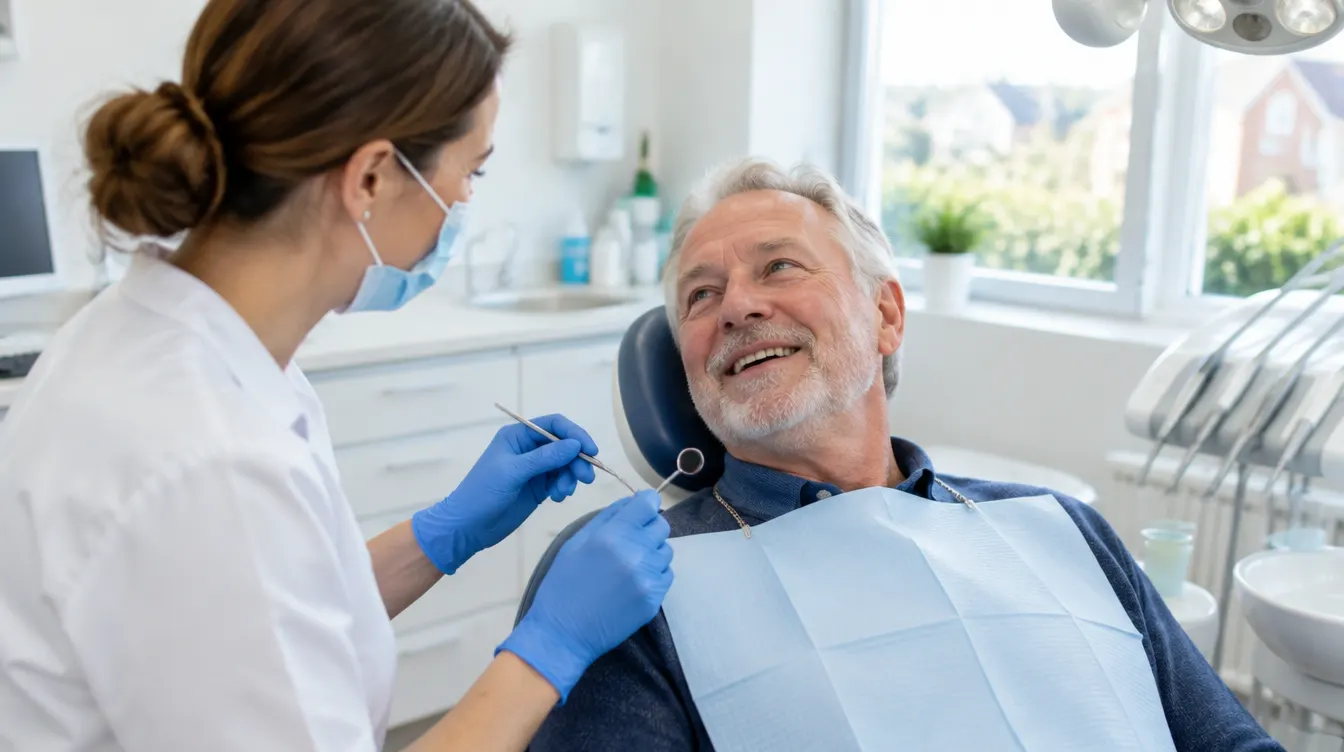
Osteonecrosis of the jaw (ONJ) is a rare side effect of some osteoporosis medicines, mainly bisphosphonates and denosumab, in which an area of jaw bone is exposed and does not heal. For people taking these medicines for osteoporosis, NHS dental guidance puts the risk at between 1 in 1,000 and 1 in 10,000. That is far lower than with the high doses used in cancer care. Good dental care lowers the risk further, and for most people the fracture protection far outweighs it.
What is osteonecrosis of the jaw?
Osteonecrosis of the jaw, often called medication-related osteonecrosis of the jaw (MRONJ), is a condition where part of the jawbone becomes exposed in the mouth and fails to heal. NHS dental guidance describes it as "a rare side effect of treatment" with anti-resorptive drugs such as bisphosphonates and denosumab, which "may result in some bone becoming exposed in your jaw" SDCEP, 2024.
The medicines linked to it in UK osteoporosis care include alendronic acid, risedronate, ibandronic acid, zoledronic acid and denosumab (Prolia). If you take one of these, you will find more detail in our guides to bisphosphonates, alendronic acid side effects, risedronate, the zoledronic acid infusion and denosumab (Prolia).
How rare is osteonecrosis of the jaw with osteoporosis treatment?
It is rare: between 1 in 1,000 and 1 in 10,000 people taking these medicines for osteoporosis. The Scottish Dental Clinical Effectiveness Programme (part of NHS Education for Scotland) explains that a risk of 1 in 10,000 means one case for every 10,000 patients who take the drugs SDCEP, 2024. The Royal Osteoporosis Society describes ONJ in people on osteoporosis treatment as "very rare" Royal Osteoporosis Society.
UK guideline figures say the same thing a different way. NOGG estimates the incidence in people receiving bisphosphonates at "10-100/100,000 person-years of exposure in clinical trials" NOGG, section 7.
Why is the risk higher with cancer treatment?
Cancer patients receive much larger and more frequent doses of the same medicines, and the risk of ONJ rises with dose and potency. NOGG states that the incidence of ONJ "is substantially greater with the higher doses of bisphosphonates or denosumab" used to treat cancer that has spread to the bone NOGG, section 7.
The MHRA makes the same point. It notes that drug potency, injection or infusion (rather than tablets) and cumulative dose all affect risk, and that in people treated for osteoporosis "the risk of ONJ is small compared with that in patients treated with the higher doses used for cancer-related conditions" MHRA, 2015. So headlines about ONJ often reflect cancer care, not the yearly or weekly doses used for bone thinning.
What increases the risk of osteonecrosis of the jaw?
The main risk factors are dental: poor oral hygiene, gum or tooth disease and dental procedures that involve the bone, such as extractions. NOGG lists "poor oral hygiene, dental disease, dental interventions, smoking", plus cancer, chemotherapy and glucocorticoid (steroid) therapy NOGG, section 7. The Royal Osteoporosis Society adds that people with unhealthy teeth and gums may be at higher risk Royal Osteoporosis Society.
Several of these can be changed. Stopping smoking helps your mouth and your skeleton (see our guide to smoking and bone health). If you take long-term steroid tablets, our guide to steroids and bone loss explains why bone protection matters.
Should you see a dentist before starting osteoporosis medicine?
Yes, ideally get any dental problems checked and treated, and tell your doctor about them, before you start, but don't let this delay important treatment after a fracture. The MHRA advises patients to "tell their doctor if they have any problems with their mouth or teeth before starting treatment" and, if they wear dentures, to "make sure their dentures fit properly" MHRA, 2015. Patients on denosumab and intravenous bisphosphonates should be given a reminder card about ONJ.
NOGG recommends a "timely dental review and dental treatment" where severe dental disease is present. It also says treatment should still start as soon as possible after a fragility fracture NOGG, section 7. This balance matters: a broken hip or spine is a far more common and serious event than ONJ.
How do you lower your risk while on treatment?
Keep your teeth and gums healthy, see your dentist regularly, and always tell your dentist which bone medicines you take. NHS dental guidance recommends SDCEP, 2024:
- Regular dental check-ups, so problems are treated early, before surgery is needed.
- Telling your dentist about all your medicines and your medical history.
- Careful daily cleaning, and asking your dentist to check your technique.
- Stopping smoking, cutting down on sugary snacks and drinks, and drinking less alcohol.
Routine dental treatment such as fillings and cleaning carries "very low to non-existent" risk. Treatment that affects the bone, like an extraction or implant, carries a higher but "still considered low" risk. Not treating dental disease has risks of its own SDCEP, 2024. Your dentist may consider less invasive options first, such as root canal treatment Royal Osteoporosis Society.
What symptoms should you report?
Contact your dentist promptly if you notice any of these: SDCEP, 2024
- pain in your jaw or a bad taste;
- swelling of the jaw;
- pus or discharge;
- loose teeth;
- tingling, numbness, heaviness or other unusual feelings in the jaw;
- bone showing through the gum.
The MHRA also lists "non-healing sores" MHRA, 2015. The Royal Osteoporosis Society advises talking to your dentist if your gums have not healed eight weeks after dental treatment Royal Osteoporosis Society. If ONJ is suspected, you will be referred to hospital specialists. Small areas are often treated with antibiotics or antibacterial mouth rinses.
Should you stop your osteoporosis medicine because of ONJ?
No, not on your own. Stopping is unlikely to reduce the risk, and stopping some medicines suddenly can cause harm. NHS dental guidance is direct: "continue to take your medication. The medical benefits are likely to far outweigh the risks" SDCEP, 2024. The Royal Osteoporosis Society says "it's unlikely that stopping or pausing your osteoporosis drug treatment will reduce your risk of ONJ" Royal Osteoporosis Society. NOGG notes there is no data showing that pausing treatment before dental procedures lowers ONJ risk NOGG, section 7.
What is the atypical femoral fracture warning?
Atypical femoral fractures are rare breaks in the thigh bone linked to long-term bisphosphonate or denosumab use, often preceded by aching in the thigh, groin or hip. NOGG puts the absolute risk at "3.2-50 cases/100,000 person-years of exposure", noting the estimate roughly doubles with prolonged bisphosphonate use NOGG, section 7. NOGG section 6 lists both ONJ and atypical femoral fractures as rare adverse effects of denosumab NOGG, section 6.
Warning pain "can be felt in the thigh, groin or hip for days, weeks or months before fracture". Patients should "report any unexplained thigh, groin or hip pain" so the thigh bone can be imaged NOGG, section 7. As with ONJ, the overall balance still strongly favours treatment for people at high fracture risk. Our osteoporosis treatment guide explains how doctors review long-term treatment.
How can you keep an eye on your bone health?
Your GP or specialist reviews your treatment over time, usually with fracture-risk assessments and, where needed, a DXA scan. Some people also like an independent picture of their bones. A radiation-free REMS bone health assessment from Screen My Bones assesses the spine and hip, can be repeated safely, and results are usually ready within 24-48 hours. It is a screening and monitoring option, not a replacement for a DXA scan when your doctor needs a formal diagnosis.
This article is for general information and does not replace advice from your GP, dentist, pharmacist or specialist. Do not start, stop or change any medicine without talking to your doctor.
References
- Dental advice for patients prescribed anti-resorptive drugs for the treatment of osteoporosis or other non-malignant diseases of bone — Scottish Dental Clinical Effectiveness Programme (SDCEP), NHS Education for Scotland (2024)
- Jaw bone problems (osteonecrosis of the jaw) — Royal Osteoporosis Society
- Section 7: Strategies for management of osteoporosis and fracture risk — National Osteoporosis Guideline Group (NOGG) (2024)
- Denosumab (Xgeva, Prolia); intravenous bisphosphonates: osteonecrosis of the jaw, further measures to minimise risk — MHRA Drug Safety Update (2015)
- Section 6: Pharmacological treatment options — National Osteoporosis Guideline Group (NOGG) (2024)
Frequently asked questions
Osteonecrosis of the jaw (ONJ), also called medication-related osteonecrosis of the jaw (MRONJ), is a rare condition where an area of jaw bone becomes exposed in the mouth and does not heal. It is a known but rare side effect of bisphosphonates and denosumab.
Related reading
Bone Health Bisphosphonates for Osteoporosis: The Drug Class Explained
Screen My Bones Editorial Team15 August 20267 min readBone Health Alendronic Acid (Alendronate): Side Effects and What to Expect
Screen My Bones Editorial Team10 August 20267 min readBone Health Osteoporosis Treatment: All Your Options Explained
Screen My Bones Editorial Team15 August 20267 min read
Check your bone health
Radiation-free REMS screening. No referral needed.